
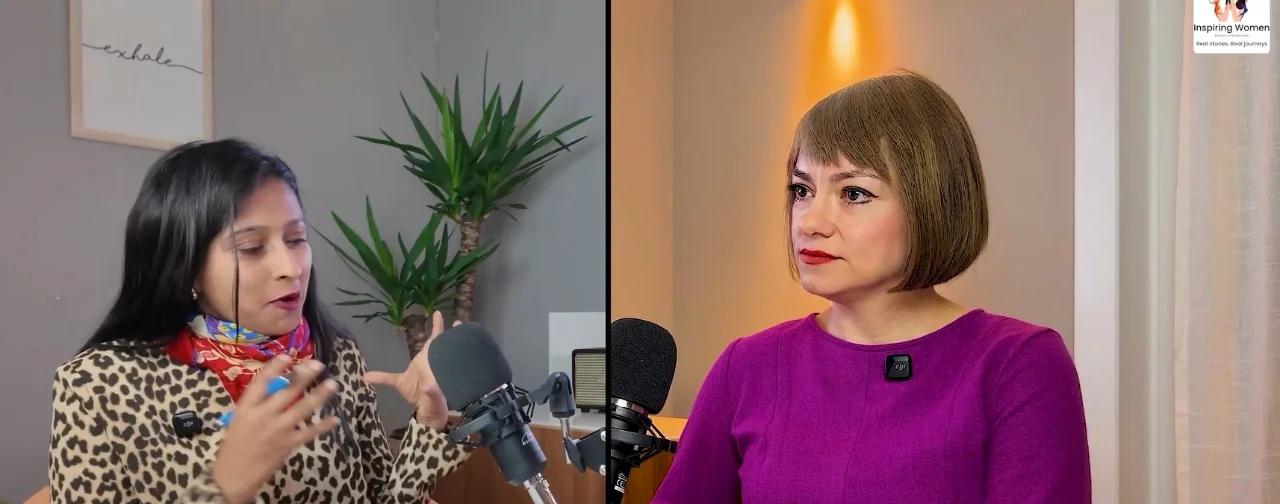
Diana—from Global Communications to supporting life’s hardest decisions
Diana has been a member of PWN Zug & Zurich since 2023. Over time, she has supported both the local network and PWN Global with communications for various initiatives and programmes. Her professional path spans international consulting, corporate communications, and today a counselling practice supporting people navigating complex life decisions around parenthood and fertility.

1. Your life took an unexpected turn when you were 32. What happened?
At 32, I received a diagnosis that made me confront a question I’d been putting off for years: did I want to become a parent? I had to make that decision fairly quickly, because the treatment would permanently affect my fertility. What followed were an infertility diagnosis, IVF rounds, miscarriages, and years of uncertainty - all while my partner and I were commuting between countries, changing jobs, learning German, and building a life away from home. It was a period that forced me to look deeply at what truly mattered to me.
2. Is that what eventually led you to counselling?
Partly. Supporting people had always been part of my work, even while I was working in corporate. Earlier in my career, I'd written a book on career counselling, and to my surprise, it became one of the top-selling books in Romania that year. Later, during my own IVF journey, I saw how many people feel isolated while navigating fertility decisions. Over time, as more people reached out to talk things through, I realised that these were conversations where I could really help.
So, I trained formally: becoming a certified counsellor, studying health coaching and mindfulness, and later completing trauma-informed and somatic training with some of the best-known experts in these fields.
Through my practice I now support people who navigate big life questions around parenthood, fertility, and identity.
3. What do you hope people find when they come across your work today?
Relief, first of all. Many people in their late 30s find themselves weighing deeply personal questions about parenthood alongside career investments, rising costs of living, and uncertainty about the future. Others are already navigating infertility or IVF. My goal is to offer a space where people can pause, reflect, and reconnect with what truly matters to them - without pressure or judgment.
4. Your background is quite unconventional. How did it lead you to counselling?
In some ways, the thread is more consistent than it might seem. Before moving into counselling, I studied for an MBA in the U.S. on a Fulbright scholarship. The programme was very practical and case study-based. I still remember managing a simulated $200,000 portfolio using software that mirrored the New York Stock Exchange as the 2008 financial crisis unfolded. It made business and investing feel very real.
After returning to Europe, I joined Deloitte in Brussels, where I worked across a wide range of policy areas - from water conservation and foreign trade to inclusive product design policies and early digital transformation projects. Those experiences showed me how complex systems shape people’s lives.
What I’ve learned over the years is that humans naturally try to simplify things and expect clear cause-and-effect explanations. But reality is rarely that tidy. Even when people seem to face similar challenges, there are no cookie-cutter solutions. That’s what I find meaningful in counselling: understanding how someone arrived at their current situation and accompanying them as they find solutions that truly work for them.
5. Where did it all begin?
I grew up in a town in eastern Romania, near the Ukrainian border. Math and sciences didn’t come naturally to me, but books did. I spent most of my childhood reading. At one point, the local librarian asked my mother if I was really reading all the books I borrowed. My mom told her, “Pick any book and ask her about it.”
So, when it came time to choose a university path, studying communication felt like the natural direction. Stories, ideas, and how people understand the world through them have always fascinated me.
These days, my 5-year-olds are my most inquisitive “customers.” When I’m close to falling asleep while reading their bedtime story, they ask tricky questions to check if I’m cutting corners or if I stick to the whole narrative until the end.