
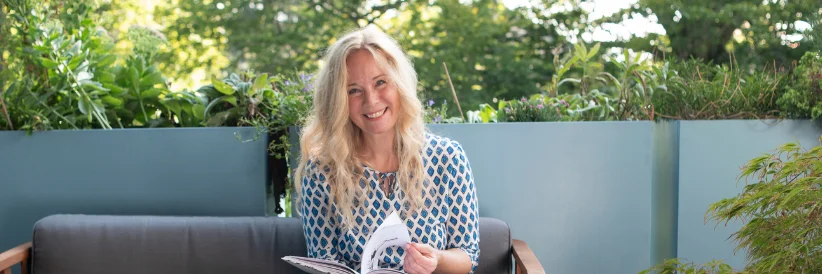
Member Spotlight: Vanessa Saint-Gelais
Life isn’t Google Maps: from neuroscience to coaching
1. You’ve had quite a journey, from neuroscience to corporate leadership and now coaching. What made you decide it was time for a change?
It never started with a big decision. It started with a creeping feeling that I wasn’t 100% in it anymore, and that part of my brain was busy asking whether any of this still made sense. The excitement and the sense of purpose faded. I felt it moving from neuroscience and academia into pharma, between functions inside corporate, and again when I left to build my own business. It’s a process of self-discovery, for the people I coach and for me.
2. You’ve talked about having a career that looked successful from the outside, but didn’t quite feel right anymore. What was that experience like for you?
From the outside, things looked fine. On the inside, I was in the middle of an identity shift: becoming someone new while the old version of me was still running the show. I’ve fallen into many of the traps that come with that, whether it was growing as a leader, claiming a promotion, or choosing my next career step.
My biggest trap was waiting for recognition or permission. When I was leaving academia, I wanted someone to tell me it was okay to change my career path. When I applied for my first leadership role, I wanted someone to acknowledge that I was ready. When I started my own business, I hoped for a sign that this was what I was meant to do. All of it did eventually happen, but only once I believed it myself.

3. What have those transitions taught you, and how do they shape the work you do today?
Any growth, development or transformation begins with you, and it starts with giving yourself permission. Permission to change who you are, even while others still see the old version. Permission to not know exactly where you’re headed. Permission to feel scared and move anyway. Then allow yourself to stay in the space where it isn’t clear yet how you’ll move forward. Explore it, with all its discomfort, and opportunities and pathways will emerge. Life isn’t Google Maps, where you type in a destination and get the fastest route to success. It’s more like sailing a boat without a map. You make a turn, you learn, you adjust your course, and before you know it you’ve drawn your own map. The key is not to get stuck at the start, but to learn how to move through the uncertainty.
That’s why I do what I do. Today I work with people in exactly these moments, and I bring all of myself to it: neuroscience to understand what’s happening in the brain when we resist change, my leadership and corporate experience to understand the real pressures people are under, and my various coaching skills to help them move through it. I use all of it in my coaching and consulting.
4. I loved your idea that being good at something isn’t necessarily the same as being energized by it. How can we tell the difference?
Being good at something means you’ve built the skill. Being energized by it is something else, and the difference shows up in how you feel afterward.
Take my own example. I’m naturally good at finding solutions and seeing how things connect, and that gives me energy. I’m also very good at data analysis and checking scientific data in detail. I built that skill along the way, and if I do too much of it, I end up more tired than energized.
That’s the difference between natural and acquired strengths. Natural strengths put you in flow, where you forget how time passes, and they often leave you with more energy than you started with. Acquired strengths are skills you built because the job needed them. You can be excellent at them and still feel drained if you use them too much. Both matter, and it would be unrealistic to expect to work only from your natural strengths.
So a simple way to tell the difference is to ask how much of a task you can do before you feel depleted. That matters when you’re choosing a role, because much of the friction at work comes from a job that doesn’t match our values, our needs and our natural strengths closely enough to leave us feeling energized and motivated.
No job is perfect, and every role has two sides of the coin. The real question is how often it lands on one side versus the other.

5. You’re now building your own business. What has surprised you most about becoming an entrepreneur?
I expected the hard work, the many hats and the long days, and I knew I would enjoy it. One of the biggest surprises was learning how important it is to get comfortable with feeling uncomfortable. When you build your own business, nobody is there to give you permission, a promotion or a sign that you’re on the right track. Every day you have to give those to yourself.
When I first started out, I was afraid of reaching out to my network. I worried I would be rejected, and that people wouldn’t be interested in my workshops and offerings. So I hesitated. Once I made a move and confronted myself with the reality, I was surprised by how much interest there was. Opportunities started to show up that would never have come if I hadn’t put myself out there.
There is no growth without friction, and none without a bit of fear. If everything feels comfortable, it’s standard procedure, with nothing new to learn, and that’s not what I’m here for. I’m grateful I gave myself the chance. In my work with clients, I see how often the fear of negative consequences is bigger than the actual risk, and how the first move is the hardest. Once you overcome that initial hurdle, things tend to get easier.
6. What do you value most about being part of the PWN Zug & Zurich community?
What I value most is the community itself. PWN brings together people from all walks of life, and I enjoy exchanging ideas with peers who see things differently than I do. Over time, some of those connections have grown into real friendships. I also appreciate that PWN builds interesting educational topics into its networking events. That makes the conversations more targeted and productive, because we’re not just meeting, we’re learning something together.
7. When you’re not coaching, speaking, or thinking about neuroscience, what do you enjoy doing? What would we discover about Vanessa over a coffee?
You’d discover that I’m happiest traveling with my husband, camera in hand. I love taking pictures of the places we visit, but even more of people and moments. I’m no professional, but it’s one of the things that lights up my day. My dad taught me as a child, so it comes with good memories.
You’d also learn that once a year I travel to a Zen temple in Japan for a week-long meditation retreat built around Kyudo, Japanese archery. It’s meditation in movement, and I practice at home too. I love spending time with my family, including my two stepchildren, now young adults. I also love growing plants, especially the moment a seed starts turning into a plant. Maybe not a coincidence for someone who helps others grow personally.